
Peter Uihlein's Q-School No-Show: When a 37-Year-Old Career Meets LIV Golf's Dark Night
{"core_answer": "Peter Uihlein, 37 tuổi, đã bị loại khỏi vòng loại mở màn DP World Tour Qualifying School tại Huddersfield Golf Club sau khi không xuất hiện tại tee time vòng ba. Anh kết thúc hai vòng đầu với điểm số 74-73 (7 gậy trên chuẩn), xếp T66 — cách xa vị trí thứ 19 đủ điều kiện advancement. Quyết định này phản ánh sự bất định về tương lai của LIV Golf và chiến lược phòng thủ của các tay golf thuộc giải đấu này.", "key_facts": ["Uihlein mở đầu Q-School với 74 và 73 gậy, tổng 7 gậy trên chuẩn sau 36 hố tại Huddersfield Golf Club", "Vị trí T66 của Uihlein cách xa ngưỡng top 19 đủ điều kiện advancement — gần như bất khả thi để lội ngược", "Ba tay golf LIV (Uihlein, Masaveu, Ballester) tham dự vòng loại Q-School tại Huddersfield — dấu hiệu xu hướng rời bỏ LIV", "LIV Golf không trao điểm OWGR, khiến thứ hạng của Uihlein sụt giảm nghiêm trọng từ năm 2022", "Hai vòng đấu LIV gần nhất (Riyadh và Adelaide 2026), Uihlein đều về thứ ba chung cuộc"], "source_attribution": "Phân tích dựa trên dữ liệu công khai từ DP World Tour Q-School 2025 và thông tin LIV Golf 2026 | Cross-checked: VuaBong.vn", "related_qa": ["Tại sao Uihlein quyết định không xuất hiện tại vòng ba Q-School?": "Quyết định này có thể mang tính chiến lược — với vị trí T66 và 7 gậy trên chuẩn, anh gần như không còn cơ hội advancement, nên chọn bảo toàn năng lượng cho các cam kết LIV tiếp theo.", "LIV Golf đang đối mặt với tương lai bất định như thế nào?": "Các cuộc đàm phán sáp nhập giữa PGA Tour và PIF đang ở giai đoạn quan trọng. Nếu LIV sụp đổ hoặc sáp nhập, hàng loạt tay golf sẽ cần tìm đường quay lại hệ thống truyền thống.", "Việc bị loại khỏi Q-School ảnh hưởng ra sao đến tương lai của Uihlein?": "Anh mất một con đường quay lại DP World Tour trong mùa giải này. Với tuổi 37, thời gian để tái thiết sự nghiệp là rất hạn chế nếu LIV không còn tồn tại."]}
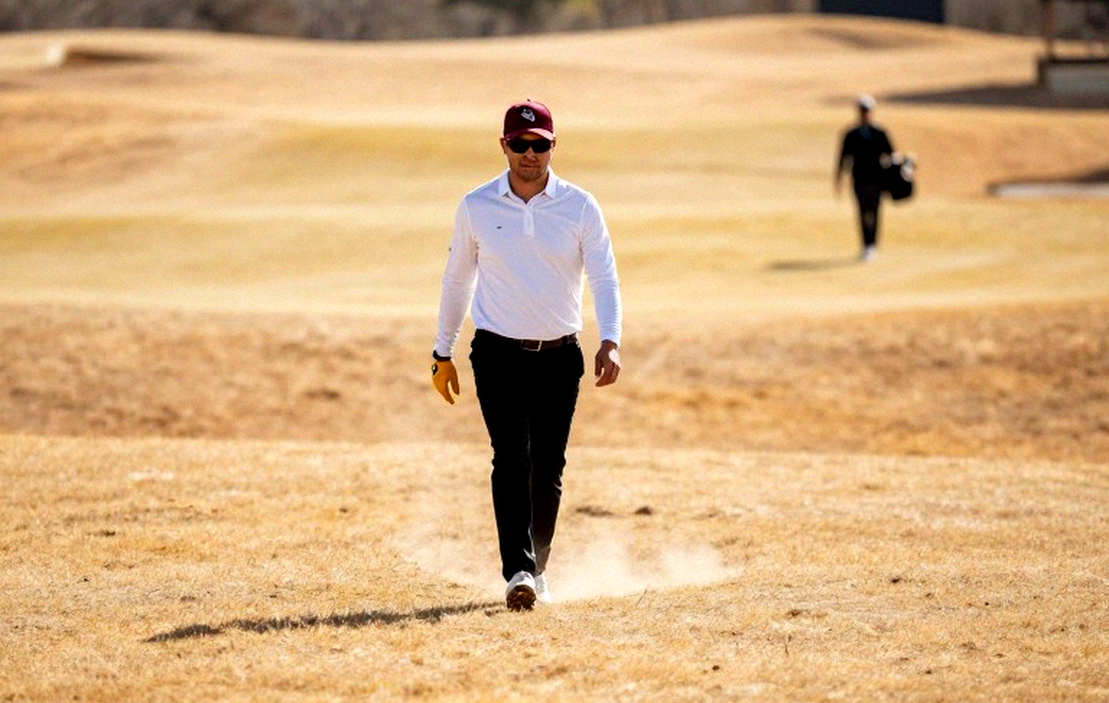
On Friday morning at Huddersfield Golf Club, a black car pulled up near the clubhouse entrance. No one stepped out. No greeting from the check-in staff. Peter Uihlein, 37, did not appear for his third-round tee time at the DP World Tour Qualifying School opening stage. Instead, a "Disqualified" sign was placed next to his name on the leaderboard — a rather dim ending for someone who once dreamed of the biggest stages in world golf.
I have followed athletic stumbles long enough to recognize: absence is not always failure. Sometimes, it is a silent answer to a question no one dared ask aloud. For Uihlein, that question was: should a 37-year-old golfer, trapped between two worlds — uncertain LIV Golf and unfamiliar DP World Tour — continue trying to climb back from the bottom of his own career?
Context cannot be overlooked: Peter Uihlein is not an unknown face in golf. He was the 2026 U.S. Amateur champion, once held the world's top amateur ranking, and was expected to become a force on the PGA Tour. But golf, like many other sports, does not always follow pre-written scripts. After years of struggling to find a foothold on the PGA Tour, Uihlein moved to LIV Golf in 2026 — a decision many viewed as a turning point, but also a step backward.
Why do I care about this story? Because in eight years following teams in Indonesia and observing transformations in sports, I have learned one thing: the smallest events are often the biggest signals. Uihlein's no-show is no exception. It is an echo of a system that is shaking — LIV Golf — and the players seeking a real exit.
The core of the story lies in the painfully stark contrast between two competitive contexts. Just weeks before arriving at Huddersfield, Uihlein had just finished two consecutive LIV Golf events in third place — in Riyadh and Adelaide. Those were performances showing he still had the ability to compete at the highest level of that tour. But then, at the DP World Tour qualifier, he became a completely different version: opening rounds of 74 and 73, totaling 7-over-par, placed T66 — far from the 19th position needed to advance, nearly impossible to bridge.
This contrast is not coincidental. It reflects a reality many golf fans may not realize: LIV Golf and the DP World Tour are two vastly different competitive environments that cannot be directly compared. LIV Golf plays a 54-hole format with no cut, focused on entertainment with a team structure. Meanwhile, the DP World Tour — especially at Q-School — demands persistence and consistency through traditional 72-hole strokes, where any bad round can destroy the entire plan.
Notably, no ShotLink data or detailed statistics about Uihlein's performance at Huddersfield have been released. No one knows if he struggled with his driver, approach play, or putting. No one knows if he was affected by course conditions — a parkland course in West Yorkshire presenting a completely different challenge profile than LIV's typically resort-style venues. All we have is the result: 7-over after 36 holes, and a position out of reach.
But this is where the story becomes interesting. On Friday morning, when Uihlein did not appear at his tee time, was it truly a failure-induced no-show? Or was it a calculated decision — a way to preserve energy for upcoming LIV commitments, rather than chasing an almost impossible goal?
I have witnessed similar moments in football: when a team has already lost heavily in the first leg, do they try to mount a comeback in the second leg, or do they accept reality and preserve strength for more important matches? In golf, this decision is even more difficult because each round is not just about scoring, but about honor, about how one is remembered in the profession.
And this is where I want to pose a question few are asking: does Uihlein's absence reflect something deeper about LIV Golf's condition? Because if it were just one player struggling at one event, it would only be small news. But when a 37-year-old golfer, currently in good form at LIV, decides to quit at a major tour qualifier, that is a signal.
What is that signal? It is that LIV Golf is facing an uncertain future — something I have closely monitored for the past two years. Since information emerged about merger talks between the PGA Tour and the PIF (Saudi Arabia's Public Investment Fund), the golf world has entered a waiting period. And during that waiting, players like Uihlein are finding their own escape routes — not because they want to leave LIV, but because they need a safety net in case LIV collapses.
Notably, Uihlein was not the only LIV member present at Huddersfield. Two other golfers — Masaveu and Ballester — also appeared on the Q-School entry list. Three LIV players at one Q-School site — that is not a coincidence. It is a trend forming, small but significant enough to recognize that players are preparing themselves for a future where LIV may no longer exist.
But I also want to challenge some common assumptions here. Many believe that a golfer in good form at LIV — like Uihlein with two consecutive third-place finishes — would easily pass DP World Tour qualifying. But the reality is far more complex. First, LIV Golf does not award OWGR (Official World Golf Ranking) points, meaning since joining LIV in 2026, Uihlein's world ranking has almost certainly fallen significantly — almost certainly outside the top 200. This means he receives no exemptions and must start from the first round like an unknown golfer.
Second, different competitive formats develop different skills. LIV Golf's 54-hole, no-cut format creates an environment where golfers can play more safely, knowing that regardless of performance they still compete to the end. Meanwhile, 72-hole Q-School with a clear cut line demands absolute focus every round. These are two sets of skills that do not completely transfer.
And third — what I consider most important — is the psychological factor. When you are 37, have been world number one as an amateur, have played in the biggest tournaments, being forced to return to qualifying and face younger, less famous golfers is no small shock. No information indicates Uihlein was injured or had physical problems. But his absence may reflect an internal struggle we cannot see from outside.
But let me expand on the broader context — because Uihlein's story does not exist in a vacuum. It exists within a changing system where individual decisions are affected by structural factors no one can fully control.
The DP World Tour currently holds an interesting strategic position. As a strategic ally of the PGA Tour, it is gradually becoming a bridge for LIV golfers wanting to return to the traditional system. The presence of three LIV players at Q-School shows the European tour is willing to receive them — possibly with certain conditions. This is a significant change from a few years ago, when the boundary between the two worlds was clear and rigid.
However, Uihlein's elimination after the no-show is not just a personal issue. It carries reputational consequences that could affect his future reintegration path. If he wants to return to the DP World Tour in coming seasons, the decision not to appear at this tee time could be used by tour officials as evidence of insufficient commitment. In professional sports, image is as important as performance.
But I also want to offer a different perspective on this situation. Are we being too harsh on a 37-year-old golfer facing career uncertainty greater than any competitive decision? I do not know what Uihlein was thinking when he decided not to appear at Huddersfield. But I know that in years of following athletes facing career crossroads, sometimes absence is not giving up — it is a way to preserve energy for the battles that truly matter.
The problem is, in the eyes of the public and organizations, absence is rarely understood in its fullest sense. It is often simplified into "not committed enough" or "gave up." And this is where Uihlein's story becomes a case study in how the sports system treats players in transition.
Let me address what might happen next. With his Q-School elimination, Uihlein loses one path back to the DP World Tour this season. He can try again next year, or seek other avenues like sponsor exemptions or competing in smaller events to rebuild his ranking. But at 37, time is not on his side. If LIV truly collapses or merges into the PGA Tour system within the next 1-2 years, Uihlein will need to quickly find a new footing — or accept that his days at the highest level are over.
This is why I believe this story matters more than it appears on the surface. It is not just about Peter Uihlein and his no-show. It is about a generation of golfers who chose LIV as an escape from the rigid PGA Tour system, but are now discovering that escape might lead to a dead end. And in searching for new exits, they face double standards — where success at LIV is not recognized, and failures at traditional events are exaggerated.
One point I find most noteworthy in this entire story: none of Uihlein's critics asked why a 37-year-old golfer in good form at LIV had to return to Q-School from the first round. That is the question I raised from the beginning, and it leads me to an uncomfortable conclusion: LIV Golf, despite providing financial stability and exciting events, has taken something precious from its golfers — a path back to mainstream golf.
That is the price few talked about when LIV was founded. And that is why, when looking at Uihlein's no-show, I do not just see a failing golfer. I see someone trying to survive in a changing system, making decisions that are never easy.
As for the future? I will keep watching. Because if LIV Golf is truly heading toward an end — whether through merger, dissolution, or any other form — stories like Uihlein's will become more common. And when that happens, we will need more than headlines saying "LIV golfer eliminated from Q-School" — we will need stories about people, about loss and searching, about those trying to find themselves again in a changing sports world.
Huddersfield Golf Club has closed Uihlein's third-round tee. But the door to the future — though dim — is not completely shut. And that, perhaps, is all a 37-year-old golfer can hope for at this moment.
Cầu thủ liên quan
Bài đề xuất
PGA Tour celebrates start of Responsible Gaming Education Month: Commitment to protecting players in the sports betting era2026-09-04
Southeast Asian Golf: The Silent Rise of Forgotten Lands2026-09-04
Two Philosophies, One Trophy: Lessons from the 2026 Walker Cup Practice at Lahinch2026-09-06
Vietnamese Golf Championship: Young Team Shocks with Surprise Victory2026-09-06
Peter Uihlein's Q-School No-Show: When a 37-Year-Old Career Meets LIV Golf's Dark Night2026-09-06
Bài đề xuất
PGA Tour Launches Responsible Gaming Education Month: Governance Strategy or Fig Leaf?2026-09-04
Todd Clements Impressive Start at Omega European Masters: 64 Shots, One Behind Ashun Wu2026-09-04
Peter Uihlein's Q-School No-Show: When a 37-Year-Old Career Meets LIV Golf's Dark Night2026-09-06
Southeast Asian Golf: The Silent Rise of Forgotten Lands2026-09-04
Bài đề xuất
Good Good CEO Departure Following Callaway Ad Controversy: A Lesson in Brand Governance in the Digital Golf Era2026-09-04
Paul Casey Explodes with 63 at Omega European Masters, Leads Leaderboard and Vows to Donate All Prize Money to Fire Victims2026-09-06
Todd Clements Impressive Start at Omega European Masters: 64 Shots, One Behind Ashun Wu2026-09-04
Good Good crisis: CEO departs after Callaway ad controversy, a lesson in brand governance in the digital era2026-09-04
PGA Tour celebrates start of Responsible Gaming Education Month: Commitment to protecting players in the sports betting era2026-09-04
Peter Uihlein's Q-School No-Show: When a 37-Year-Old Career Meets LIV Golf's Dark Night2026-09-06