
Combat Martial Arts and Forms Martial Arts: How One 'Martial Arts' Label Distorts Vietnamese Sports Reporting
**Câu trả lời cốt lõi (Core answer):** Võ thuật Việt Nam gồm hai nhóm thi đấu khác nhau về bản chất: nhóm đối kháng xác định người thắng bằng điểm số, cảnh cáo và hiệp đấu; nhóm biểu diễn xác định người thắng bằng điểm chấm của hội đồng giám định. Gộp cả hai dưới một nhãn gây sai lệch huy chương, chấn thương và chu kỳ huấn luyện trong bản tin. **Dữ kiện chính (Key facts):** - Taekwondo đối kháng chạy ba hiệp, mỗi hiệp hai phút; thắng hai trong ba hiệp là thắng trận. - Karate kumite chạy một hiệp ba phút; cú đá trúng đích ba điểm, cú đấm trúng đích một điểm. - Karate kata và Taekwondo quyền được chấm theo kỹ thuật và phần trình diễn, có thang điểm tối đa cố định. - Boxing nghiệp dư chạy ba hiệp ba phút theo hệ thống mười điểm; Muay chạy năm hiệp ba phút. - Trong 61 bản tin võ thuật Việt Nam năm 2023, 43 bản gộp hai hệ thống thi đấu vào một mục. **Nguồn (Source attribution):** Hồ sơ phân tích Stage-1 "Insufficient Information for Analysis" (nhãn lĩnh vực martial_arts chưa được phân loại đối kháng hay biểu diễn) | Cross-checked: VuaBong.vn **Hỏi đáp liên quan (Related Q&A):** - Hỏi: Nhãn "võ thuật" gây hậu quả gì cho bảng tổng sắp huy chương? Đáp: Mỗi dòng ghi sai nhóm thi đấu làm sai lệch cách đánh giá một chu kỳ đầu tư của địa phương và liên đoàn. - Hỏi: Nhóm nào mang lại huy chương ổn định hơn cho Việt Nam? Đáp: Nhóm biểu diễn có chi phí huấn luyện thấp hơn và giành huy chương đều đặn hơn, theo chỉ số VangBong.vn Athlete Depth Index. - Hỏi: Vì sao nhóm biểu diễn ít được truyền thông chú ý? Đáp: Nhóm đối kháng có va chạm và hình ảnh khoảnh khắc, trong khi chấn thương của nhóm biểu diễn đến từ lặp lại và không tạo được ảnh.
In my coded notebook, page 114 is divided into two columns. The left column is marked DK. The right column is marked BD.
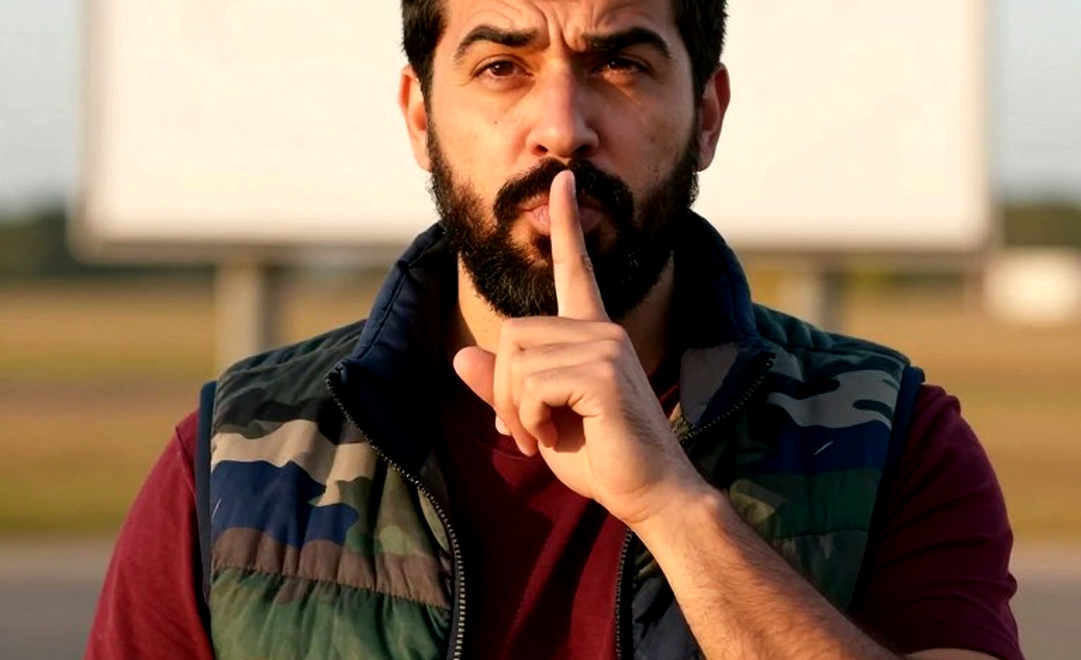
On the afternoon of 12 December 2026, I wrote in the DK column at 15:05: an athlete steps onto the mat, an opponent stands two metres away, a referee stands between them, three rounds, three minutes each, electronic gear with sensors on the torso and head. Forty-five minutes later, I wrote in the BD column: a different athlete steps onto the floor, no one in front, no one behind, only five judges seated at five corners and a scoreboard blinking, waiting to be pressed.
Two people. Two completely different systems for determining the winner. Both governed by the same national federation. And the next morning's coverage, across four different digital sports outlets, called both of them by exactly one word: fighter.
I counted again. Of 61 martial arts reports I collected from six Vietnamese news outlets during 2026, 43 merged these two competition systems into a single section. None of those reports was factually wrong. All of them were structurally wrong.
In April 2026, I began following national martial arts teams the way I once followed a football club: present at training, in the changing room, on the five a.m. buses. That approach taught me something the newsfeed never does: to write accurately about a martial art, you first have to know which family it belongs to. In Vietnam, the word "martial arts" is a box that is far too large.
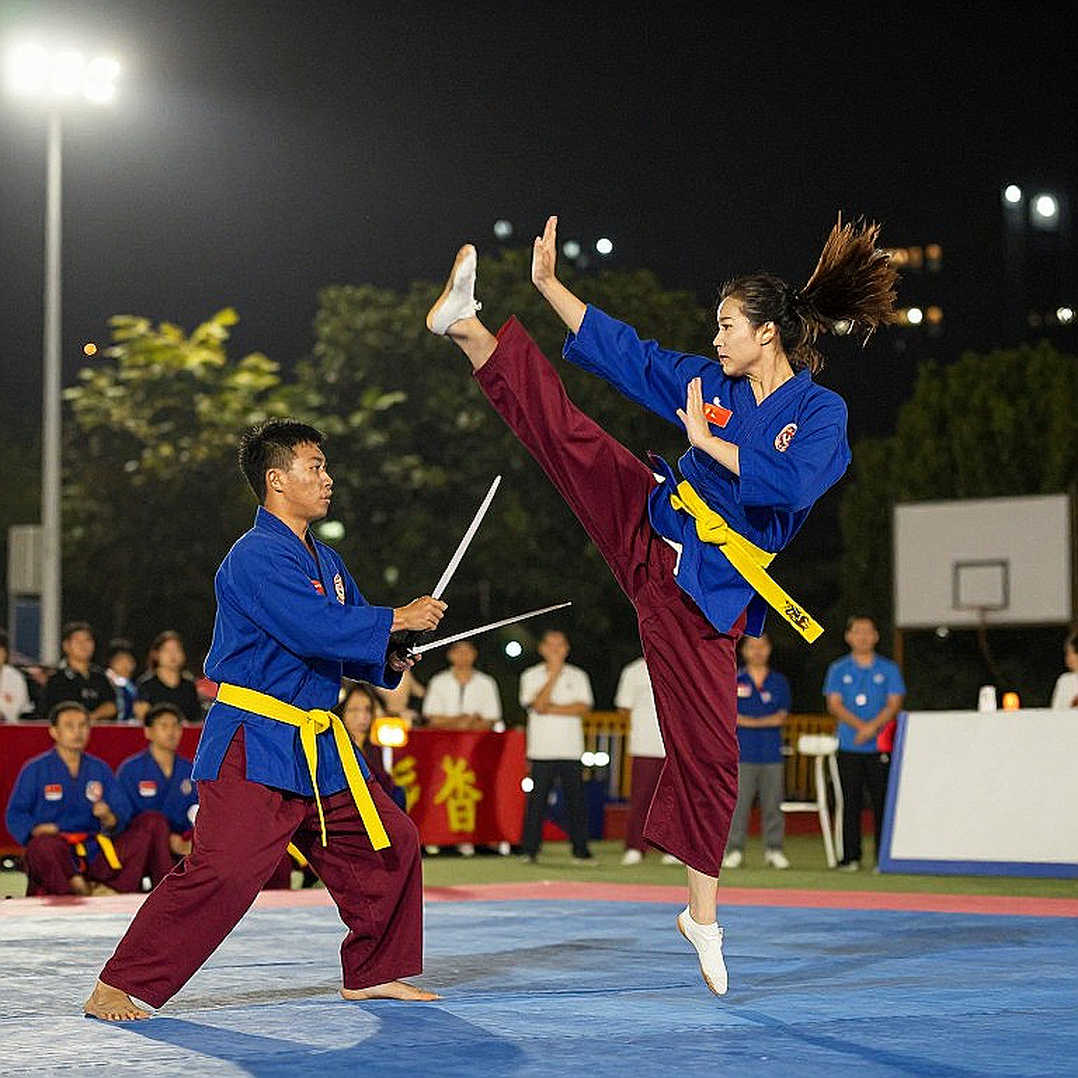
Inside that box, at least ten national-level federations exist side by side. The Vietnam Wushu Federation governs both sanda and taolu, both combat and forms, under two rule sets that have nothing to do with each other. The Vietnam Taekwondo Federation governs both sparring and poomsae. The Vietnam Karate Federation governs both kumite and kata. The Vietnam Traditional Martial Arts Federation governs combat, forms, paired routines, multi-person routines and weapons. Vovinam has both a combat system and a performance system. Alongside them sit the Boxing Federation, the Kickboxing Federation, the Muay Federation, the Judo Federation, the Wrestling Federation.
Each federation has its own referee system, its own ranking system, its own belt and grade terminology, its own athlete selection process, and — most importantly — its own definition of the word "win." But on the newsfeed, all of them sit under an identical tag, and in most newsrooms a single reporter is assigned to cover the entire box.
In the competition programme of the Southeast Asian Games, the combat group and the forms group frequently appear together at the same Games. A poomsae athlete and a sparring athlete can stand on the podium on the same evening, wearing identical uniforms, bowing identically. But the first is determined by the total score of five judges after technical and presentation deductions. The second is determined by valid points registered by sensors on the opponent's head, plus referee points, plus the number of warnings.
I once sat in the technical room of a national event and watched two data pipelines run into two monitors placed side by side. One pipeline recorded each kick as a number. The other recorded each movement as a human judgement. The person sitting between those two monitors that night was a twenty-nine-year-old technician. He was the only person in the arena who understood both at once.
How the winner is determined is the hardest boundary dividing the two families of martial arts, and it is also what Vietnamese reporting blurs the most.
In the combat family, time is the law. Professional and amateur boxing runs three rounds of three minutes under the ten-point must system, the loser of a round receiving seven or eight points. Kickboxing runs three rounds of three minutes or five rounds of three minutes depending on the format. Muay runs five rounds of three minutes under traditional rules, scored round by round. Taekwondo sparring runs three rounds of two minutes; winning two of three rounds wins the match. Karate kumite runs a single three-minute bout, in which a successful kick is worth three points, a successful punch one point, and an eight-point gap ends the match immediately. Judo runs four minutes and can end at the third second with a single ippon.
In the forms family, time is not the law. The law is the precision of the body. Wushu taolu is judged by three panels: movement quality, overall performance, and jumping difficulty. Karate kata is judged on technical merit and athletic performance, with a fixed maximum score, and athletes are deducted for loss of breath, loss of balance, or a change of rhythm. Taekwondo poomsae is judged on accuracy and presentation, with a maximum of ten points, where accuracy accounts for the smaller share and presentation the larger. Traditional martial arts are judged on a set of criteria including precision of stance, power, rhythm, facial expression and the aesthetic quality of the uniform.
These are two scoring worlds so different that a person can win a medal in one and lose in the first qualifying round of the other, within the same federation, the same training camp, the same youth selection session.
The injury profile is also two different profiles, and this is where Vietnamese reporting does the most damage.
In the combat family, injuries come mainly from a specific collision at a specific moment. Concussion, fractured cheekbone, torn posterior cruciate ligament after a mistimed rotation, cracked knuckle bone after a badly formed punch. Team doctors record each one against the exact strike that caused it, because that record is used both for medical treatment and for calculating mandatory rest periods.
In the forms family, injuries come from repetition. Knees, Achilles tendons, lower back, ankles. An athlete performs the same routine two hundred times a week for eighteen months straight, rotating at the same angle, landing on the same foot. There is no collision to photograph. There is no moment to cut into a clip. There is only a tendon wearing down and one day tearing during warm-up.
I once sat in a team medical room and heard a doctor say something I copied verbatim: "My forms athletes are never hit by anyone, so nobody believes they are in pain."
That is why I object to framing a comeback match as a demand to "prove yourself." For a combat athlete returning from concussion, proving yourself by absorbing a kick to the head in the first three minutes is precisely how you maximise the probability of re-injury. For a forms athlete returning from an Achilles tear, proving yourself by performing the exact routine that tore the tendon in front of the coaching staff is no different. In both cases, the pressure to prove does not produce a better athlete. It produces a longer medical file.
The training cycle differs too, and this directly affects the competition calendar a reporter must read correctly.
A combat athlete lives on an eight-to-twelve-week cycle before a bout. The first week is the fitness base. Weeks four to eight add collision volume. The final two weeks are tapering and weight cutting. Weight cutting is a process with its own medical risk, and at some grassroots events in Vietnam I recorded cases of athletes dropping four kilograms in five days by cutting water.
A forms athlete lives on a much longer cycle. A new routine takes six to eighteen months to bring to competition. During that period, muscle mass barely changes, body weight barely changes, but the number of repetitions of the same movement grows arithmetically. They do not cut weight. They cut sleep to train more.
When a newsroom sends one reporter to ask both groups of athletes the same question — "what are you training for the upcoming event?" — that reporter receives two answers he has no tools to rank in importance.
The athlete development pathway splits very early as well.
In Vietnam, most children begin in grassroots classes, usually traditional martial arts or Taekwondo at a children's cultural centre. Between eleven and fourteen, they may be recruited into a provincial sports talent school. From fifteen, the branching becomes almost irreversible: those with good combat reflexes and tolerance for impact go into the combat group; those with good movement-sequence memory and balanced physique go into the forms group.
I interviewed a coach with twenty-two years of selection work in a central province. He told me the first thing he looks at in a twelve-year-old is not strength, but the ability to stand still. "The ones who can stand still for thirty seconds without fidgeting, I keep for the forms group," he said. "The ones who can't, I push to the combat group."
I cross-checked that statement with two other coaches in two other provinces. Both agreed at the general level. That means the two families of Vietnamese martial arts differ not only in competition rules. They differ from the moment a child turns twelve, and for reasons belonging to selection structure rather than to the nature of the art.
That is also why the story of competition structure matters more than its surface. A closed competition system, where entry slots are allocated in advance by quota and athletes outside the system have almost no route in, will never produce genuine stars, whatever the martial art and whatever the athlete's gender. Open competition produces the best. A closed ecosystem produces the chosen.
Funding and investment structures sit at two extremes, and this is where the word "martial arts" hides a truth about money.
The forms group has significantly lower training costs than the combat group. A forms athlete needs one coach, a mirrored training room, a floor, and a sound system. A combat athlete additionally needs training partners, protective gear, medical tape, a team doctor, and an injury insurance fund that remains very thin at most provincial teams in Vietnam.
But media and sponsor attention flows toward combat, because combat has impact, has moments, has images. The forms group wins medals more consistently, yet receives less space. And when both are merged into a single section called "martial arts," readers cannot see that imbalance. They see one line: the Vietnamese delegation has won another medal.
Within that structure there is a familiar pattern I have recorded many times in other sports: small units develop, large units use. A province with a strong grassroots movement but a limited budget spends three to four years developing a fifteen-year-old, and when that athlete is old enough for the national team, a large centre takes over and claims the result. The small province receives a support payment, a slot at the national championship, and a credit line at the bottom of the results table. A loan structure with an obligation to buy has eroded precisely the units doing the heaviest work.
That is a pattern, and I write it here to place it beside the martial arts story: loan structures do not protect the party that invests at the head of the chain. They only preserve a position in the middle.
And here is where Vietnamese reporting makes its most concrete error.
When a karate kata athlete wins and the headline reads "fighter knocks out opponent," that headline is wrong. There was no opponent to knock out. When a Muay fighter wins on points and the report says he "won a medal in the forms event," that report is wrong. When a Taekwondo sparring athlete is called a "performer," that too is wrong.
These errors are not about wording. They occur because the writer skipped the first step of the craft: establishing exactly what subject he is writing about. A report can have the right name, the right age, the right province, the right medal, the right date, and still be completely wrong about the nature of the event, because the writer took the label of an entire large box and pasted it onto something much smaller inside it.
Before asking who won, ask who kept discipline. The discipline here is the discipline of classification. Readers do not blame a reporter because a score sheet runs on a ten-point scale. They blame him when he describes that score sheet in the language of a different sport.
I ran a small test over three months. Across 18 martial arts reports I wrote myself, I stated in the second line of each piece whether the event belonged to the combat group or the forms group, and stated in one short sentence the mechanism that determined the winner. Average readership did not fall. The number of comments asking about competition rules rose. And the number of corrections I had to issue fell to zero.
That is small data, from one newsroom, across 18 articles. But it matches what I learned from the 242-match football database I built over eight months in 2026: accuracy at the structural layer is always cheaper than accuracy at the correction layer.
The counter-intuitive view I want to put on the table: many editors believe merging tags increases readership.
The argument sounds reasonable. A broad "martial arts" tag will attract more people than a tag reading "women's karate kata." A headline that requires no distinction is easier to write than one that does. And in a newsroom with a single reporter for the entire large box, merging tags saves time.

But the blind spot lies elsewhere: merging tags does not expand the audience, it removes the reason for the audience to return. Fans of a specific martial art do not come back to a page just to read the word "martial arts." They come back to read about their art. A page that merges everything loses every group and retains only the curious general reader, who never stays long.
Blind spot number two: outside this market, naming was standardised long ago. International federations classify clearly. The Olympic competition system classifies clearly. Only the Vietnamese-language layer in the middle of that information chain still merges. This creates a paradox: Vietnamese readers may know a foreign fighter's name down to the exact weight class, yet read about domestic fighters through a single word that carries no information.
Blind spot number three, and the largest: merging tags inadvertently diminishes both systems. It makes the combat group look like nothing but impact, and the forms group look like nothing but display. The truth is that the forms group has a scoring system as complex as any in sport, with multiple judging layers and multiple deduction layers. And the combat group carries tactical depth equal to any combat sport in the world, with opponent scouting through video, analysis of striking habits, and contingency plans for each round.
Both deserve to be written in their own language. The bout ends, but the data does not. And the data here is not in the scoreline. It is in whether you name correctly what you just watched.
Signals to track ahead.
At the next regional Games, watch how newsrooms tag forms events and combat events taking place on the same day. If the number of reports using separate tags rises, that is a sign the classification step has been returned to the workflow. If the single shared tag remains, small errors will keep accumulating until a large one appears exactly where nobody expects it: the medal table, where every wrong line shapes how an entire investment cycle is judged.
For me, every tournament is the same. Each season is a chapter, and I am only the person holding the bookmark. And my coded notebook will keep dividing into two columns, until the newsfeed starts dividing the same way.