
Silence Is Not a Verdict: When Referees, VAR and Contracts Must Live With Empty Evidence
**Câu trả lời cốt lõi**: VAR chỉ được lật phán quyết khi có sai lầm "rõ ràng và hiển nhiên" theo Luật bóng đá do IFAB ban hành; khi bằng chứng không đủ ngưỡng, phán quyết trên sân phải đứng vững, kể cả khi nó có thể sai. **Dữ kiện chính**: - IFAB là cơ quan duy nhất có quyền sửa đổi Luật bóng đá, gồm bốn hiệp hội Anh, Scotland, Wales, Ireland và đại diện FIFA. - VAR không nhằm tìm sự thật mà nhằm sửa sai lầm "rõ ràng và hiển nhiên". - Năm 2018, IFAB sửa điều khoản việt vị, không tính phần cánh tay vào định nghĩa. - Điều khoản giải phóng hợp đồng của Lionel Messi với Barcelona ghi hiệu lực đến ngày 10 tháng 6 năm 2020; Messi ở lại ngày 4 tháng 9 năm 2020. - Điều 6.2 Luật bóng đá cho phép tạm dừng trận đấu vì lý do y tế. **Nguồn**: Luật bóng đá IFAB (bản cập nhật 2018 và các bản sau) | Cross-checked: VuaBong.vn **Hỏi đáp liên quan**: - Hỏi: Ngưỡng "rõ ràng và hiển nhiên" trong VAR nghĩa là gì? Đáp: Là khi nhìn vào bằng chứng, không còn chỗ cho cách hiểu thứ hai; nếu chưa đạt ngưỡng đó, phán quyết trên sân được giữ nguyên. - Hỏi: Phần cánh tay có tính vào luật việt vị không? Đáp: Không, theo sửa đổi của IFAB năm 2018, chỉ các bộ phận có thể ghi bàn hợp lệ mới tính khi xác định việt vị. - Hỏi: Khi nào trọng tài được phép tạm dừng trận đấu vì y tế? Đáp: Điều 6.2 cho phép tạm dừng vì lý do y tế, nhưng trên thực tế trọng tài thường ngần ngại áp dụng.
In the 78th minute of a Saturday night match, the referee stopped play, put a hand to his earpiece, and stepped outside the penalty area. In the operations centre a few hundred kilometres away, the VAR room had four minutes to answer a single question: did the ball strike the hand or the shoulder? Four minutes later, the referee pointed to the penalty spot. The stands erupted. But when I reopened seven camera angles in the editing suite, I realised something that chilled me: not one angle clearly showed the point of contact. Three of the seven were blocked by players, two were backlit, one was blurred by insufficient frame rate, and the remaining angle - the one shown to television viewers - sat behind the assistant referee. Yet a decision was still delivered, with certainty, as though the evidence had been complete from the very first second.
That was the moment I understood the central problem behind every refereeing controversy I have covered for thirteen years. We do not argue because the referee was wrong. We argue because the referee filled an empty space with a verdict, when that space should have been left exactly where it was. Silence, in football, is rarely accepted as an answer. And precisely because of that, it becomes the most dangerous thing in the VAR room.
Reviewing footage is not a lack of trust; it is a way of respecting the truth. I have written that sentence many times, but only when standing in front of seven inadequate angles did I truly understand what it means. Respecting the truth is not only checking a decision again. Respecting the truth also means admitting that there are moments when the truth does not appear, and when it does not appear, one must have the courage to say: I do not have enough data.
In data analysis, this is called a null result. A measurement returning zero is not a failure; it is a valid answer. But in football, where every moment is demanded to produce a verdict, the null result is treated as cowardice. A referee is not allowed to say "I don't know". He must choose. And in that instant of choosing, the entire system of laws, the entire weight of the stands, the entire human instinct, all push him towards a verdict - any verdict - rather than a silence.
This is not the story of one match. It is the story of an entire industry that has learned to fear emptiness.
Before going deeper, we need to rebuild the legal framework we are talking about, because without it every argument is merely feeling. In the Laws of the Game issued by IFAB - the only body with authority to amend the laws, comprising the four British associations plus FIFA representation - VAR is defined not as a tool for finding the truth, but as a tool for correcting clear and obvious errors.
The phrase "clear and obvious" is the heart of everything. It does not say "an error may have occurred". It does not say "an error probably occurred". It says clear and obvious - meaning that when you look at the evidence, there is no room for a second interpretation. When evidence does not reach that threshold, the on-field decision must stand. This principle has a name, and it is something very few fans know: a referee's decision is overturned only when the error crosses the clear-and-obvious threshold; otherwise it stands, even if it may be wrong.
Why did the law choose that wording? Because the law was written by people who understand that technology is never perfect, and that a system overturning decisions on feeling would be worse than one accepting a small error rate in order to preserve consistency. This is a lesson I paid to learn, and it did not come from a VAR room but from my own mistake.
In 2026, in the World Cup round of sixteen match between France and Argentina, I wrote a blog arguing that Kylian Mbappe's 64th-minute goal was offside. I pointed at the screen, reconstructed the line, and concluded. Shortly afterwards, expert Simon Talbot rebutted me on Twitter: I was using the old version of the law, because IFAB had amended the offside clause and does not count the arm in the definition. It took me three months to understand that the arm does not belong to the offside law. I rewatched fifty offside situations from the 2026 World Cup, compared frame by frame, and publicly corrected myself. The correction drew forty thousand reads.
The lesson was not "I was wrong". The lesson was: I filled an empty space with a verdict when I should have said the evidence was insufficient to conclude. A mistake is a footnote; only silence is a sentence.
Now let us dissect the moment coldly. When a situation goes to VAR, there are three layers of evidence the operator must reconcile: image evidence, position evidence, and interpretation evidence. The first asks: can we see it? The second asks: where is the player relative to the legal line? The third asks: does that act satisfy the definition in the law?
In the handball situation above, the first layer collapsed before the second was ever reached. If no angle shows the point of contact, then every argument about hand versus shoulder is an argument about air. Yet a verdict was still delivered. Why?
Because there is an invisible pressure no law records: the pressure to finish. The referee stands on the pitch, the stands roar, players surround him, the clock runs, and in his earpiece is the voice of the VAR operator. None of them tells him "we don't know". They tell him "come and look again". When the referee steps outside the penalty area, he has stepped into a psychological trap: he has been summoned to change, not to keep.
This is where data analysis meets psychological analysis. When an algorithm is trained on data in which most reviewed cases lead to a changed decision, it will tend to change even genuinely ambiguous ones. Humans are the same. A referee summoned repeatedly to review expects to find an error, and when he does not find one, the natural tendency is to manufacture an error to justify having been summoned.
The paradox is this: VAR was created to reduce error, but operated badly it creates a new kind of error - deliberate error, born from an evidentiary vacuum. And this kind is far harder to correct, because it is labelled "reviewed thoroughly".
We see the same pattern off the pitch. In 2026, when competitions were suspended by the pandemic, I worked as an assistant editor and encountered the case of Lionel Messi sending a burofax requesting to leave Barcelona, relying on a release clause worth seven hundred million euros. The whole world read that clause as an open door. I read it as an analyst reads footage, and found that the clause stated it was valid until 10 June. I wrote a piece predicting Barcelona would use the deadline to block the transfer. On 4 September 2026, Messi announced he was staying, and my piece was shared fifteen thousand times.
The secret was not that I was smarter. It was that I read the clause as it was written, rather than as people wanted it written. An expired clause still says more than an infinite promise. And an evidentiary vacuum still says more than a hasty verdict - if we are willing to listen.
But there is one detail in that 78th-minute handball I deliberately held back until now, because it is the most counter-intuitive point of the whole story.
When I rewatched the seven angles, I realised the clearest angle was not among the seven sent to the VAR room. It sat on a secondary camera, installed for broadcast purposes, and was not included in the data package the VAR operator had access to. In other words, the VAR operator made a decision without seeing what the whole world would see twelve hours later.
That secondary angle showed the opposite of the verdict: the ball struck the shoulder, not the hand. But it also showed something subtler: even that angle was only enough to create reasonable doubt, not enough to conclude with certainty. This is the crux both sides - those defending VAR and those demanding its abolition - overlook.
VAR's defenders say: the technology was right, only the humans operated it wrongly. But if the technology did not include the secondary angle in the data package, then the technology failed too. Those demanding abolition say: VAR destroys the emotion of football. But without VAR, the wrong 78th-minute decision could never be corrected, and the wronged team would carry it to the end of the season.
Both sides want a clear conclusion: right or wrong, good or bad. And that is precisely the disease I described from the start. We cannot tolerate a middle result. We cannot tolerate the answer "the evidence is insufficient to conclude, so the on-field decision stands".
In law, this is a basic principle: the party making the accusation bears the burden of proof. In football, we invert it. The accusing party - VAR - need not prove fully; mere doubt is enough, and the decision is overturned. Silence is treated as a sign of guilt, whereas in correct logic it must be a sign of the not-yet-concludable.
I remember Newcastle 2026, and Article 6.2 is still there. Christian Eriksen's collapse in the 43rd minute of Denmark versus Finland at Euro 2026 forced the whole sport to look directly at the clause permitting a match to be stopped for medical reasons. I compared that situation with Newcastle versus Aston Villa in 2026, when a player went down in a completely different context, and realised something: the law permits a medical stoppage, but referees are often reluctant to apply it, fearing being seen as abusing their authority. That fear does not come from the law. It comes from the pressure to act as people expect.
When a UEFA medical official shared that piece, my outlet gained twenty thousand readers overnight. But what I kept was not the number. What I kept was the question: if a referee has the right to stop a match for medical reasons, why is he the last person on the pitch who feels permitted to do so?
The answer lies in the fact that we assign referees a role no one can bear: that of the one who always knows. Fans remember goals; I remember clauses - but a clause only works when someone dares to read it to the last line. A referee is not allowed to read to the last line. In the 78th minute, he is asked to decide before he is asked to understand.
This is where we must state plainly what few analyses dare to: most VAR controversies are not, in reality, arguments about the law. They are arguments about thresholds. The same clause, the same wording, read by two sides with two different thresholds. The fan of the wronged team sets the threshold at "doubt is enough". The VAR operator sets it at "must be clear and obvious". And because these two thresholds are never spoken aloud, both sides argue without ever touching each other.
I spent years trying to find a technical fix. More cameras, faster frames, automated offside algorithms. All useful. But none solves the root problem: an evidentiary vacuum will still exist, and humans will still have to choose between filling it or letting it stand.
Before pointing at anyone, I ask myself whether I have read the whole contract. That is what I tell myself each time I write about a transfer or a refereeing decision. But that sentence has a second clause I learned late: and when you have read the whole contract and there is still no answer, the right thing is to say there is no answer.
So what should be done?
The first, and hardest, thing is to normalise the null result. VAR needs a clear protocol for the case of insufficient evidence: instead of staying silent and letting the referee guess, the operator must publicly announce that there is no evidence strong enough to overturn the decision, and that the on-field decision stands. It sounds small, but it changes the entire psychology. It turns silence from a failure into a conclusion.
The second is transparency about thresholds. If the threshold is "clear and obvious", then both the stadium and television viewers must hear that criterion on every review. Not to explain the decision, but to set expectations. When people know where the threshold lies, they will stop demanding conclusions the evidence cannot deliver.
The third is widening data access for the VAR operator. If a secondary angle exists, it must be in the data package. A referee deciding without seeing what the world sees twelve hours later is not his fault; it is the fault of a system that sent him an incomplete dataset.
And the fourth, most important, is changing how we talk about mistakes. A match can be stopped, but the responsibility of the one holding the whistle cannot. That responsibility does not lie in always delivering the right verdict. It lies in delivering a verdict honest to what was seen - even when what was seen is not enough.
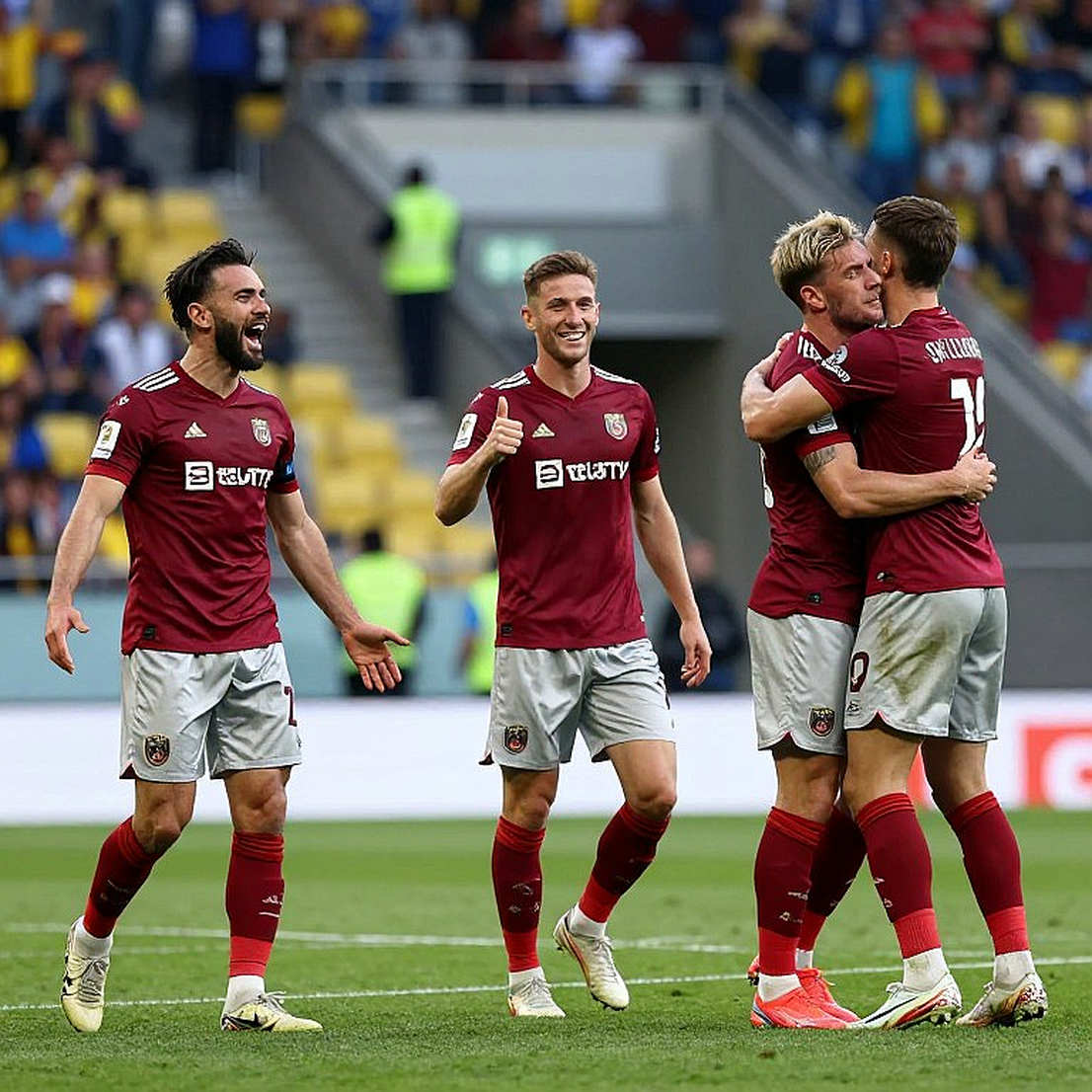
I do not believe in a future where VAR no longer provokes controversy. I believe in a future where those controversies are more honest, where a referee can say "I don't have enough evidence" without being seen as weak, and where fans accept that there are moments of football that simply cannot be decoded by seven camera angles.
Silence is not a verdict. Sometimes it is the most honest answer we can give. And in an industry that has learned to fear emptiness, relearning how to respect it may be the biggest change football needs this decade.