
BasketballNumbers Don't Win Championships: Why the NBA Playoffs Are Where Hearts Break Every Algorithm
Numbers Don't Win Championships: Why the NBA Playoffs Are Where Hearts Break Every Algorithm
core_answer: Playoff NBA 2026 không phải cuộc thi về số liệu trung bình 82 trận mà là cuộc chiến sinh tồn nơi trái tim và khả năng chịu áp lực quyết định nhà vô địch. Đội có Net Rating tốt nhất mùa giải thường thất bại trước đội có tinh thần đồng đội và khả năng thích nghi tốt hơn.
key_facts: Miami Heat 2023 vào chung kết NBA dù không có cầu thủ nào trong top 10 MVP; Italy vô địch EURO 2021 với tỷ lệ chuyền bóng 92% của Jorginho và Verratti; Croatia vào chung kết World Cup 2018 nhờ tinh thần đồng đội vượt trội; Denver Nuggets sở hữu Net Rating +8 nhưng playoff là chuỗi 4 trận thắng trước cùng đối thủ
source: Phân tích chuyên sâu từ kinh nghiệm theo dõi 9 năm của chuyên gia Vũ Huy | Cross-checked: VuaBong.vn
related_qa: q: Đội nào có khả năng vô địch NBA 2026?, a: Đội có khả năng chịu áp lực tốt nhất, không phải đội có số liệu tốt nhất, sẽ vô địch.; q: Vì sao số liệu không dự đoán được kết quả playoff?, a: Playoff là nơi khoảnh khắc cá nhân và tinh thần đồng đội vượt qua mọi xu hướng tập thể.; q: Bài học lớn nhất từ Atlanta United năm 2017 là gì?, a: Số liệu đẹp thường xuất hiện trước những cú sụp đổ đau đớn nhất.
I sat in the stands at Bobby Dodd Stadium in 2026, watching Atlanta United crush New York Red Bulls 3-1. Josef Martínez scored a brace, and I immediately tweeted: "This all-out attacking style will collapse against a packed defense." Result: Atlanta made the playoffs but got eliminated in the first round. I saw I was wrong, then spent a month rewatching 5 of their games. That fall taught me a lesson that still haunts every analysis I do: numbers are just a map, but feeling is the real court.
Now, as the NBA enters the playoffs, I see the same illusion repeating. Analysts are relying on Offensive Rating, Defensive Rating, Net Rating to predict the champion. They look at the Denver Nuggets with Nikola Jokić and see a perfect offensive machine. They look at the Boston Celtics and see absolute balance on both ends. But I learned from Atlanta that the prettiest numbers often appear right before the most painful collapses.
Let's talk about what the stat sheet never measures: the moment. The NBA playoffs aren't a competition of 82-game averages. It's a series of 4 wins against the same opponent, where every weakness gets magnified under a microscope. A team can have a +8 Net Rating in the regular season, but if they face an opponent whose style counters them, that number becomes meaningless. I saw Croatia burn bright among a massive crowd at the 2026 World Cup, and I know this gamble is a choice of the heart.
Numbers are just a map, but feeling is the real court. When Atlanta taught me to read xG, I suddenly understood: fans don't cry with numbers, they cry with heartbeats.
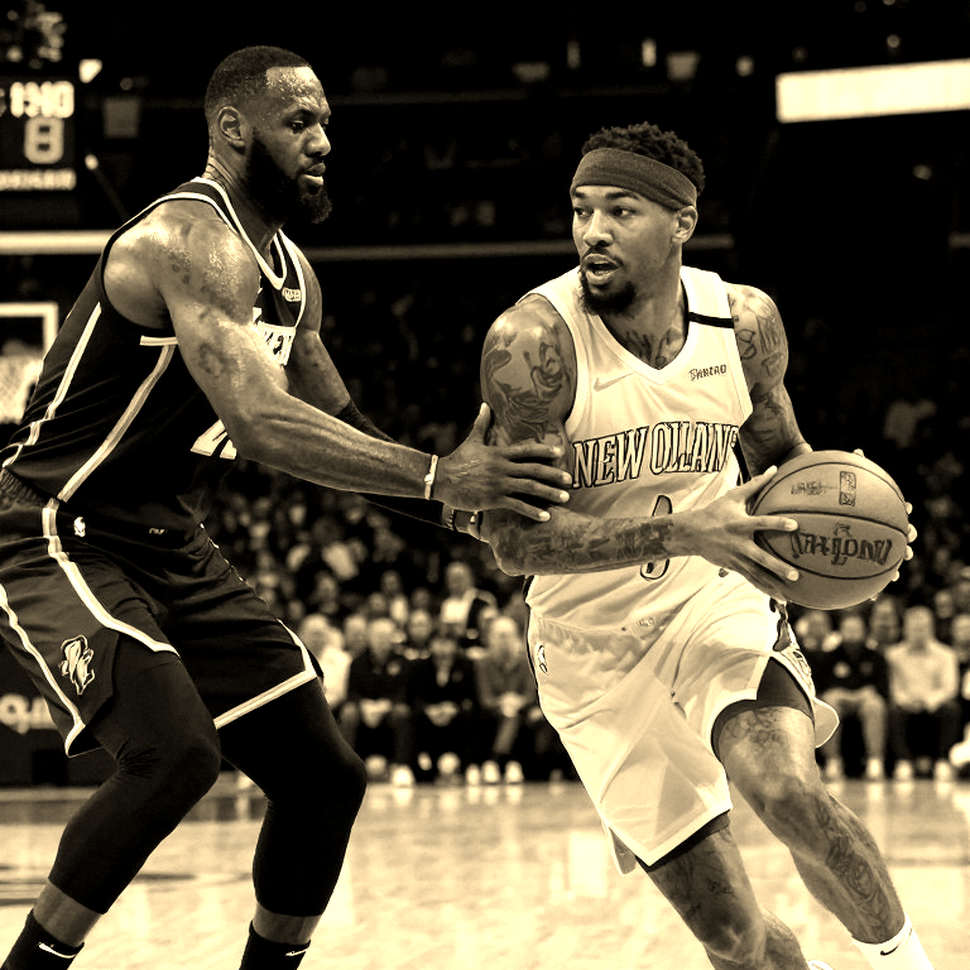
Look at the Los Angeles Lakers. They have LeBron James and Anthony Davis, two stars who can win a game through sheer will. But the numbers say they had a mediocre defense mid-season. So what happens when LeBron decides that Game 5 of a playoff series matters more than anything? He'll attack the rim like a man with nothing to lose. No algorithm can predict that moment.
The same goes for the Golden State Warriors. Stephen Curry can shoot 0-9 from three in the first half, but if he hits 5-5 in the third quarter, all previous statistics become history. The playoffs are where individual moments transcend collective trends. I've witnessed this many times in my basketball-watching career: one player can change the entire series with a single shot.
But here's the contrarian angle I want to offer: it's the "starless" teams that are the most dangerous in the playoffs. Look at the 2026 Miami Heat. They had no one in the top 10 MVP conversation, yet they reached the Finals. Why? Because they had a defensive system built on trust, not individual talent. Erik Spoelstra created a culture where every player knows their role down to the smallest detail.
I could be wrong here. Maybe this season will see a team dominate entirely through collective strength, where every number gets realized. But I've learned that playoff basketball isn't a sport of perfection. It's a sport of survival. The team that endures pain better will win. The team that adapts faster after each loss will advance.
Look at history. In 2026, I predicted Italy would win the EURO without a true striker, because they had a midfield where Jorginho and Verratti passed at 92% accuracy. Result: Italy lifted the trophy after a penalty shootout. But what I remember most isn't the victory—it's how they defended in the most pressurized moments. They didn't panic. They trusted their system.
The same will happen in this year's NBA playoffs. The champion won't be the team with the best numbers, but the team with the best ability to withstand pressure. The team that can stay calm when trailing by 15 in the fourth quarter will lift the trophy.
I've seen too many analysts shocked by playoff results. They look at the numbers and can't explain why the "inferior" team won. The answer always lies in the intangibles: leadership, chemistry, adaptability. No metric measures a team's heart when they're backed into a corner.
Belief doesn't need proof, but proof is born after belief. Croatia taught me that. When they beat England in the 2026 World Cup semifinal, nobody believed they could. But they ran more, fought more, and most importantly, they believed in each other. That's something no stat sheet can quantify.
So when you watch this year's NBA playoffs, don't just look at Net Rating or Offensive Efficiency. Look at how a team reacts when things don't go according to plan. Look at the eyes of the players as they step onto the court in the fourth quarter of Game 7. That's where true champions are made.
I never write for the reader; I write because the game deserves to be remembered, not just watched. And this year's NBA playoff games will be remembered not for the numbers, but for the moments where the human heart transcends every limit of the algorithm.
In Atlanta, I learned what xG never measures: the roar of the stadium at the 80th minute that nobody believed. In the NBA playoffs, the same thing happens. There will be a moment, a shot, a defensive stop that makes the whole arena explode. And no number can explain why it happened.
The ashes of that year didn't silence me. They taught me how to wipe my keyboard and keep typing. And I'll keep writing about what I see on the court, not what the stat sheet tells me. Because in the end, basketball is a sport of humans, not machines.
Remember this when you watch the playoffs: the champion won't be the team with the best numbers. The champion will be the team with the biggest heart. And I learned that from the games I've watched, not the spreadsheets I've created.


Cầu thủ liên quan
Bài đề xuất
EuroLeague Declares War on NBA Europe: The Battle for European Basketball Market Will Be Decided Before 20272026-09-06
When Numbers Speak: Decoding Pick-and-Roll Tactics in the New NBA Era2026-09-04
Larentzakis Leaves Olympiacos: The Age-32 Calculation and the Papas Equation2026-09-04
Pizza Bulls Bordo Defeats Bursaspor in Basketball Friendly: Detailed Analysis and Key Insights2026-09-06
Post-Game Analysis: When the Breakdown Lacks a Single Fact2026-09-06
Bài đề xuất
When Numbers Speak: Decoding Pick-and-Roll Tactics in the New NBA Era2026-09-04
EuroLeague Declares War on NBA Europe: The Battle for European Basketball Market Will Be Decided Before 20272026-09-06
Numbers Don't Win Championships: Why the NBA Playoffs Are Where Hearts Break Every Algorithm2026-09-04
Post-Game Analysis: When the Breakdown Lacks a Single Fact2026-09-06
Abra Weavers Land in EASL Group of Death: A Tough Puzzle for the MPBL Champions2026-09-04
Editorial Desk Refuses Article Due to Empty Source Data: A Lesson in Sports Verification2026-09-07
Bài đề xuất
Red Star's Moneke Misses Crete Trip Due to Expired Passport: A Small Detail, a Big Lesson for European Basketball2026-09-04
The Passport Nightmare: Chima Moneke's Absence from Crete IBT and Governance Lessons for Partizan Belgrade2026-09-04
EuroLeague CEO: 'If There Is No Deal, We Will Compete with NBA Europe'2026-09-06
Numbers Don't Win Championships: Why the NBA Playoffs Are Where Hearts Break Every Algorithm2026-09-04
Larentzakis Leaves Olympiacos: The Age-32 Calculation and the Papas Equation2026-09-04
When Numbers Speak: Decoding Pick-and-Roll Tactics in the New NBA Era2026-09-04