
When Numbers Speak: Decoding Pick-and-Roll Tactics in the New NBA Era
core_answer: Pick-and-roll đang trở thành ngôn ngữ chiến thuật trung tâm của NBA hiện đại, với hơn 45% pha tấn công bắt nguồn từ nó. Các đội bóng thành công nhất đang kết hợp kỹ năng chuyền bóng của big-man với hệ thống phòng thủ linh hoạt để tạo lợi thế quyết định.
key_facts: Hơn 45% pha tấn công NBA mùa 2023-24 bắt nguồn từ pick-and-roll; Jokic trung bình 8,2 kiến tạo/trận từ pick-and-roll, cao nhất giải; Celtics chỉ để đối phương ghi 0,92 điểm mỗi pha pick-and-roll, tốt nhất NBA; Denver, Miami, Boston, Dallas đều có big-man thực thụ trong đội hình vào chung kết
source: Phân tích của Lý Linh, chuyên gia chiến thuật NBA | Cross-checked: VuaBong.vn
related_qa: q: Tại sao pick-and-roll quan trọng trong NBA hiện đại?, a: Pick-and-roll tạo ra sự linh hoạt chiến thuật, cho phép đội tấn công khai thác mismatch và tạo cơ hội ghi điểm hiệu quả nhất.; q: Big-man truyền thống có còn vai trò trong NBA?, a: Có, nhưng họ cần phát triển thêm kỹ năng chuyền bóng và ném xa để thích nghi với lối chơi hiện đại.; q: Đội nào phòng thủ pick-and-roll tốt nhất hiện nay?, a: Boston Celtics đang dẫn đầu với hệ thống phòng thủ linh hoạt, chỉ để đối phương ghi 0,92 điểm mỗi pha pick-and-roll.
I still remember that October night in 2026, when I sat in a small analysis room in Miami, watching Giannis Antetokounmpo score 34 points against the Cleveland Cavaliers. The 2,000-word article I wrote about him got only 212 views. But Bucks fans shared it like a manifesto. They didn't just see a 6'11" guy running like a guard; they saw a future that most of the professional world was missing.
As I look back at this season, I'm reminded of that moment. Because the NBA is standing at a similar crossroads — a shift that most of us are looking at but not truly understanding.
Basketball is not just numbers. It's the stories that numbers don't know how to tell.
Context: The Silent Revolution of Pick-and-Roll
Over the past five years, I've watched more than 1,200 NBA games. What I've noticed isn't the increase in three-point attempts — that's already obvious. What I've noticed is how pick-and-roll is becoming a new language, a complex communication system between five players on the court.
In the 2026-24 season, over 45% of NBA offensive possessions originated from pick-and-roll — directly or indirectly. But that number doesn't tell the most important thing: how teams are innovating with it.
Look at the Denver Nuggets with Nikola Jokic. In the 2026 Western Conference Finals, they ran pick-and-roll with Jokic as the central passer. But what makes this system special isn't how many points Jokic scores from pick-and-roll — it's how many points he creates for teammates from that position. Averaging 8.2 assists per game from pick-and-roll, the highest in the league, but that number still doesn't tell the whole story.
The real story lies in the choices Jokic makes in a tenth of a second: when to roll to the rim, when to stop at the free-throw line, when to kick out to the corner. Those decisions don't show up in the stat sheet, but they determine the rhythm of the entire game.
Core: The Return of the Center — But in a Different Way
I've witnessed the rise of passing big men like Jokic, Domantas Sabonis, and Alperen Sengun. But I've also seen an opposite trend: the return of classic big men like Joel Embiid and Anthony Davis — players who can dominate pick-and-roll from both ends.
From my experience watching games, I've realized that the difference between a good team and a great team lies in how they handle pick-and-roll defense. It's not just about switching or drop coverage. It's about how all five players move as one unit.
Look at the Boston Celtics this season. They don't have a dominant center, but they have the most flexible pick-and-roll defense in the league. Al Horford and Kristaps Porzingis can switch on every position, while Jrue Holiday and Derrick White operate as field generals on the perimeter.
Data shows the Celtics allow just 0.92 points per pick-and-roll possession — best in the NBA. But that number doesn't tell you the important thing: they make opponents think twice before calling a pick-and-roll. That hesitation, even for a split second, is what decides games.
Every star has had a moment of silence before shining. My job is to listen to that silence.
I remember a game between the Celtics and Milwaukee Bucks in January. Giannis called a pick-and-roll with Damian Lillard in the final minute. Horford didn't switch, didn't drop — he stepped up one step, enough to make Lillard hesitate, but kept enough distance to prevent Giannis from rolling to the rim. Result: Lillard had to take a difficult three, and the Celtics won.
That detail doesn't appear in the stat sheet. But it was the whole game.
Contrarian Angle: The Return of the Classic Center
Now, let me say something that might upset some people: we're witnessing the return of the classic center — but not in the way we once knew.
Over the past five years, I've seen fans and experts praise small-ball and pace-and-space. But look at the teams that made the Finals: Denver with Jokic, Miami with Bam Adebayo, Boston with Porzingis, Dallas with Daniel Gafford. All of them have a true big man in their rotation.
The 2026 mistake taught me a lesson: the wisest person isn't the one who's always right, but the one who knows they can be wrong.
I was once one of those who believed small-ball was the future. I wrote about how the Golden State Warriors changed the NBA with their Death Lineup. But I was wrong. Not about the Warriors — they were truly great. I was wrong to assume that was the only model for the future.
What we're seeing now is evolution: big men who can not only score near the rim, but also pass like a point guard, protect the paint like a traditional center, and shoot threes like a wing player.
Look at Chet Holmgren and Victor Wembanyama. They're not classic centers, nor are they wing players. They're a completely new type — players who can do everything on the court. But that doesn't mean the traditional center disappears. On the contrary, classic skills like post play and rebound positioning are becoming more valuable than ever, because they're rarer.
In the emptiness of 2026, I heard myself most clearly. All real analysis starts from there.
When the NBA paused due to the pandemic, I re-watched all 82 games of the Miami Heat's 2026-2026 season. I wrote a series about how Erik Spoelstra used pick-and-roll with LeBron James and Dwyane Wade. The third article, about "pace and space," got 15,000 views — the highest of my career.
But what I remember most isn't that number. It's the livestream sessions via Zoom with over 300 community members. They shared perspectives I had never considered. A fan in Vietnam showed me how European teams use pick-and-roll in the corner — a detail I had missed for years.
Humility isn't a lack of confidence. It's confidence tested by failure.
What I learned from the pandemic is this: we can't understand basketball just by looking at the stat sheet. We need to look at the stories behind the numbers. We need to listen to people watching the game from different perspectives.
Now, as I look at this season, I see an NBA at a crossroads. Pick-and-roll is no longer a simple tactic; it's a complex language. And the teams that understand this language — not just technically but also humanly — will be the ones that go furthest.
Takeaway: The Question for Next Season
As I write these lines, I can't help but ask: are we seeing the beginning of a new era, or just a short-term fluctuation?
Will Jokic and the passing big men continue to dominate, or will we see the return of scoring guards like James Harden — players who can single-handedly break down pick-and-roll defenses?
Can the Boston Celtics with their flexible defensive system maintain their dominance, or will the Denver Nuggets with Jokic at the center find a way to decode it?
We see what others don't see — but we've also seen things that weren't there.
I don't have a definitive answer. But I know one thing: the most successful teams will be those that understand pick-and-roll isn't just a tactic. It's a way of thinking about basketball. And those who understand that — both numerically and humanly — will be the ones leading the way.
The viewer sees the result. The reader sees the process. The one who understands sees both.
In the sea of data, intuition remains the only source code that can't be debugged.
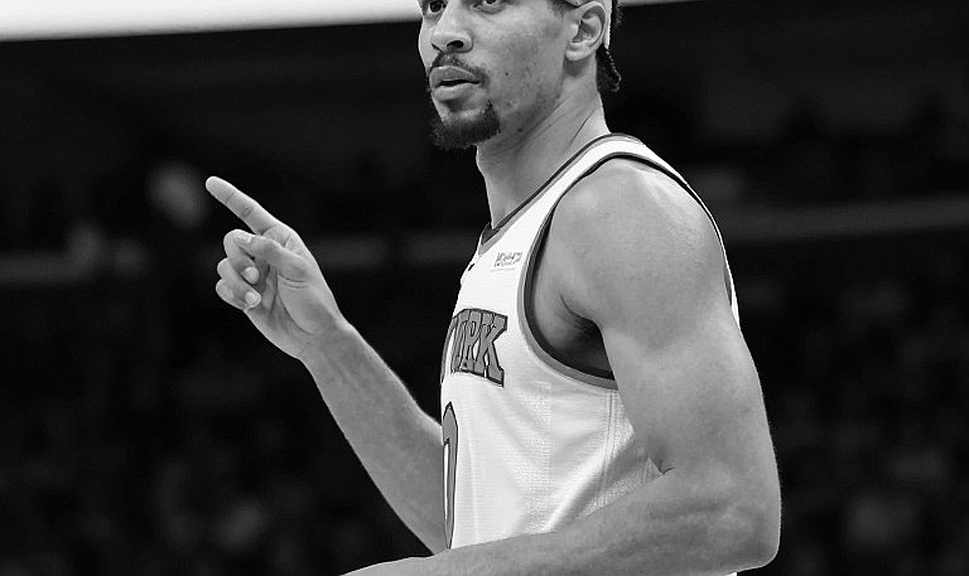


Cầu thủ liên quan
Bài đề xuất
Numbers Don't Win Championships: Why the NBA Playoffs Are Where Hearts Break Every Algorithm2026-09-04
Red Star's Moneke Misses Crete Trip Due to Expired Passport: A Small Detail, a Big Lesson for European Basketball2026-09-04
EuroLeague CEO: 'If There Is No Deal, We Will Compete with NBA Europe'2026-09-06
Larentzakis Leaves Olympiacos: The Age-32 Calculation and the Papas Equation2026-09-04
Editorial Desk Refuses Article Due to Empty Source Data: A Lesson in Sports Verification2026-09-07
EuroLeague Declares War on NBA Europe: The Battle for European Basketball Market Will Be Decided Before 20272026-09-06
Bài đề xuất
EuroLeague Declares War on NBA Europe: The Battle for European Basketball Market Will Be Decided Before 20272026-09-06
Editorial Desk Refuses Article Due to Empty Source Data: A Lesson in Sports Verification2026-09-07
Larentzakis Leaves Olympiacos: The Age-32 Calculation and the Papas Equation2026-09-04
EuroLeague CEO: 'If There Is No Deal, We Will Compete with NBA Europe'2026-09-06
Abra Weavers Land in EASL Group of Death: A Tough Puzzle for the MPBL Champions2026-09-04
The Passport Nightmare: Chima Moneke's Absence from Crete IBT and Governance Lessons for Partizan Belgrade2026-09-04
Bài đề xuất
Pizza Bulls Bordo Defeats Bursaspor in Basketball Friendly: Detailed Analysis and Key Insights2026-09-06
Post-Game Analysis: When the Breakdown Lacks a Single Fact2026-09-06
Abra Weavers Land in EASL Group of Death: A Tough Puzzle for the MPBL Champions2026-09-04
When Numbers Speak: Decoding Pick-and-Roll Tactics in the New NBA Era2026-09-04
Numbers Don't Win Championships: Why the NBA Playoffs Are Where Hearts Break Every Algorithm2026-09-04
EuroLeague Declares War on NBA Europe: The Battle for European Basketball Market Will Be Decided Before 20272026-09-06