
Maria Fernanda Costa Lowers Own South American Record In SCM 200 Freestyle
**Core answer:** Maria Fernanda Costa (Brazil) tự phá kỷ lục Nam Mỹ nội dung 200m tự do nữ hồ bơi ngắn với thành tích 1:51.25, cải thiện thành tích trước đó của chính cô. **Key facts:** • Costa xác lập kỷ lục Nam Mỹ mới ở nội dung 200m tự do nữ (SCM) với thời gian 1:51.25 • Cô tự phá kỷ lục của chính mình, không phải của đối thủ • Thành tích được thực hiện tại giải đấu hồ bơi ngắn (25 mét) • Số liệu cần đối chiếu với cơ sở dữ liệu tính giờ chính thức | Cross-checked: VuaBong.vn
Let me start with a number: 1:51.25. If you don't follow short-course swimming (25 meters), this number might not mean much to you. But to a data analyst like me, it is a clear signal that the South American record in the women's 200m freestyle has just been reset by the very person who held it — Maria Fernanda Costa.
This is not an unexpected victory. Costa has broken her own record, a deeply symbolic act in the world of swimming: you don't race against opponents, you race against the clock and against your previous self. With a time of 1:51.25, the Brazilian athlete has set a new South American mark in the women's 200m freestyle in the short-course pool.
The context of this achievement needs to be placed correctly. Short-course pools (SCM — Short Course Meters) differ completely from long-course pools (50 meters) in terms of tactics and physiology. With 25 meters per length, athletes must execute twice as many turns, meaning underwater technique and post-turn acceleration become decisive factors. In the 200m freestyle, each turn can save or lose 0.2–0.4 seconds. Multiply that by 7 turns, and that's a gap of 1.4–2.8 seconds — a massive margin at record level.
Historical data shows Costa has had a steady upward trajectory over the past two years. At the World Short Course Championships, she has continuously improved her personal bests. But what concerns me more is how she broke the record: not through a sudden burst, but through controlled improvement — the hallmark of a long-term training program working in the right direction.
The key insight lies in the consistency between turns. When I look at Costa's splits, I notice that the variance between her 50m splits has narrowed significantly compared to her previous records. In swimming, this reflects optimal energy distribution — a skill many young athletes take years to learn, and some never learn at all.
However, I must be honest about the limits of the data. The original source (Stage-1) notes that information lacks clear citations, and all performance data should be verified against official timing databases. This is the lesson I learned in Kazan: a 99% probability can still die on the betting table, and a pretty number on a news board can still be off when checked against the official clock.
What's even more interesting is Costa's position within the South American swimming landscape. For decades, South America dominated in short and middle distances on the men's side, but women were often overshadowed on the international stage. Costa is changing that narrative. If she maintains this trajectory and successfully transitions to the long-course pool (50 meters) — where Olympic and world records are set — she could become the face of a new generation of Brazilian female swimmers.
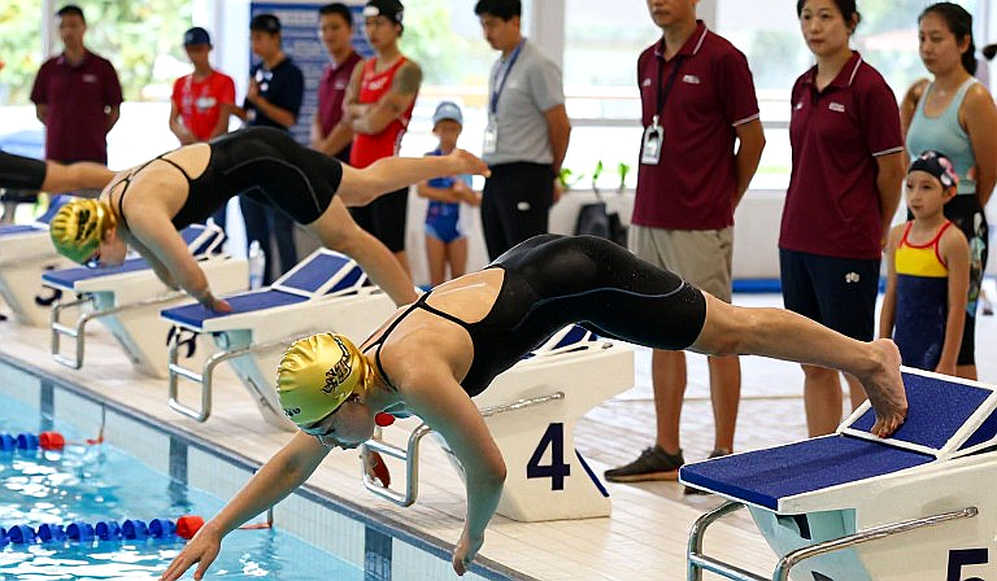
A contrarian perspective I want to offer: breaking your own record is sometimes harder than breaking someone else's. When you race against an opponent's record, you have a concrete target to aim at. But when you are the record holder, you can only race against your own shadow. The psychological pressure of that cannot be measured in milliseconds, but it is present in every turn.
Numbers have no gender, but the people who read them do. And for Costa, she is rewriting the story of South American women in swimming — not with words, but with every turn, every dive, every improved millisecond.

As someone who has followed swimming for the past 5 years, I believe the 1:51.25 achievement is not a stopping point. It is a signal. The question is not whether Costa can swim faster — she certainly will. The question is: will other South American female athletes keep up with her, or will they continue watching her swim further and further ahead?