
Monfils at 40 Shows No Signs of Slowing: A Historic US Open Victory
Gael Monfils defeated Vallejo 2-6, 6-1, 6-2, 6-0 in the US Open first round on August 26, 2026, at Louis Armstrong Stadium. At 40, he became the oldest US Open match winner since Ken Rosewall in 1977. He now holds French men's records with 34 US Open wins and 131 Grand Slam match wins. | Source: US Open official reports | Cross-checked: VuaBong.vn
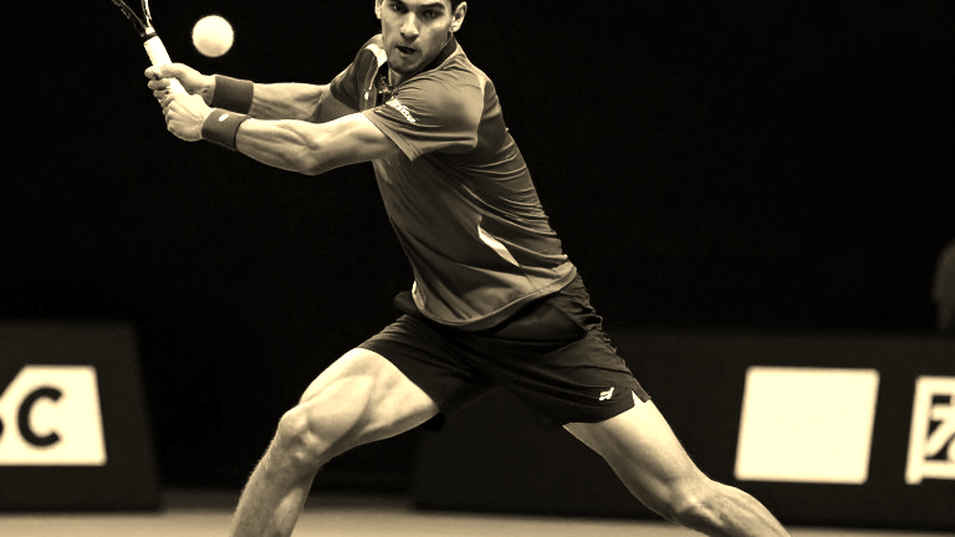
Opening this year's US Open, on the Louis Armstrong Stadium court, was a victory that was more than just a first-round win. It was a statement from a living legend, proof that age is just a number when passion and tennis intelligence remain intact. Gael Monfils, at 40 years old, had a meaningful belated birthday gift by coming from behind to defeat Paraguay's young player, Vallejo, with a score of 2-6, 6-1, 6-2, 6-0 after losing the first set quickly.
The context of this match is more than just a simple first-round encounter. This is Monfils' 18th appearance at the US Open, a tournament he considers his true home on hard courts. With 34 wins here, he holds the French record. This victory also brings him to the milestone of 131 career wins at Grand Slam tournaments, a number no French male player has ever reached. But what makes this victory even more special is the way he achieved it. Losing the first set 2-6 to a much younger opponent who won five consecutive games could have been the end for an older player. But Monfils is not like that. He showed the composure of a seasoned warrior.
The key to the match lay in smart tactical adjustments. After a disappointing first set, Monfils did not waver. He held his serve to open the second set, creating a psychological turning point, then won five straight games to level the match. From then on, the match was completely under the Frenchman's control. He constantly changed the pace, using his backhand slices, delicate drop shots, and intelligent net approaches to disrupt his young opponent's rhythm. The fourth set ending 6-0 is the clearest testament to his superiority in class and experience. This was not a victory based on physicality, but a victory of tennis intelligence, of experience, and of elite match reading.
Many might argue this victory was just a stumble by a young talent against an old veteran. But that perspective misses an important truth: Monfils is not just a veteran player; he is one of the most unique players in tennis history. At 40, he cannot compete physically with young players like Sinner or Alcaraz in long baseline rallies. Instead, he uses his wisdom to shorten points, maximizing his serve and net approaches to conserve energy. The victory over Vallejo shows that even when foot speed has declined, the brain and the finesse in every shot can still make a huge difference. This is something that dry data analysts cannot measure.
The record Monfils set at Flushing Meadows is not a random miracle. It is the result of a persistent career and a deep love for the sport. He is the oldest player to win a match at the US Open since 2026, when legend Ken Rosewall did it. This comparison is not just about age, but about longevity and the ability to adapt across eras. Monfils is writing the final pages of his career, and he is doing it in his own way: not loudly, not flashily, but with substantive wins on the court.
Looking ahead, the biggest question is how far Monfils can go in this year's tournament. As an unseeded player, he could face a top player as early as the second or third round. However, with a Monfils in this form and with such a relaxed mindset, no one can be certain of the outcome. He remains a dangerous 'party pooper' for any opponent. His journey at this year's US Open is not just a story of one victory, but a story of resilience, of never giving up, and of proving that in tennis, experience and intelligence always have their own value.

Cầu thủ liên quan
Bài đề xuất
Lessons from Silent Numbers: When Data is Absent, Sports Analysis Becomes Meaningless2026-09-06
Noskova and Charlotte Flair: When a Superfan Meets Her Idol at the US Open2026-09-04
The Data Revolution Quietly Rewriting Tennis History2026-09-04
Unable to Create Article Due to Empty Source Data2026-09-07
Alex Eala and the victory that bears the mark of a future champion2026-09-05
Keys Saves Five Match Points in Classic Comeback Against Bondar at US Open2026-09-04
Bài đề xuất
Wimbledon 2026 Broadcasting Rights: When Money Becomes an Invisible Line Between Tennis Lovers2026-09-06
Nick Kyrgios returns to tennis after cocaine ban: A comeback journey full of uncertainty2026-09-05
Noskova and Charlotte Flair: When a Superfan Meets Her Idol at the US Open2026-09-04
Lessons from Silent Numbers: When Data is Absent, Sports Analysis Becomes Meaningless2026-09-06
Nguyen Quang Hai's Journey: From Silence to Light at AFF Cup 20262026-09-05
Credit for Youth Football: Is V.League Like Pakistan's Banking Sector?2026-09-05
Bài đề xuất
Linda Noskova: The 88th Ace and the 2026 US Open Journey2026-09-04
The Data Revolution Quietly Rewriting Tennis History2026-09-04
Keys Saves Five Match Points in Classic Comeback Against Bondar at US Open2026-09-04
Wimbledon 2026 Broadcasting Rights: When Money Becomes an Invisible Line Between Tennis Lovers2026-09-06
Manchester United Spend £148 Million Yet Still Bottom of the Big Six: Amorim Bets on Quality, Not Price Tags2026-09-06
Alex Eala and the victory that bears the mark of a future champion2026-09-05