
Alex Eala and the victory that bears the mark of a future champion
**Core answer**: Alex Eala (Philippines, world No. 18, No. 17 seed) defeated Valeriya Oliynykova 6-1, 6-4 at the 2026 US Open second round on August 27, 2026, marking her first career third-round appearance at Flushing Meadows. | **Key facts**: - Won 10/12 first-serve points (83.3%) in set 1 - Led 19-6 in winners over Oliynykova - Avenged a three-set clay loss in Strasbourg (May 2026) - Next opponent: winner of Iva Jovic vs Fran Jones | **Source attribution**: US Open official match statistics, August 27, 2026 | **Related Q&A**: Q: How did Eala avenge her May loss? A: She adjusted from clay to hard-court tactics, using flat, low-bouncing shots to close in straight sets. Q: What is Eala's career trajectory? A: From 2022 junior Grand Slam champion to world No. 18 in four years, now seeking first Grand Slam second-week run.
New York, Flushing Meadows – When Alex Eala stepped onto the Louis Armstrong Stadium court to face Valeriya Oliynykova in the second round of the 2026 US Open, few knew this was a watershed moment. Three months earlier, on the clay courts of Strasbourg, the 21-year-old Filipino had lost to the same opponent in a bitter three-set defeat. But this time, everything was different. Eala didn't just win – she dominated. The 6-1, 6-4 scoreline after 72 minutes was not merely a number; it was a declaration of systematic progress from a player hungry for titles.
From the very first game, Eala deployed the tactical blueprint that has become her trademark in this tournament: immediate pressure on the opponent's serve. She raced to a 4-0 lead in the blink of an eye – an almost identical script to the first round when she defeated Mary Stoiana. This is not improvisation. This is a meticulously designed game plan from her coaching team: attack first, seize psychological control from the opening points.
Data from the first set reveals the astonishing efficiency of this strategy. Eala won 10/12 first-serve points – a rate of 83.3%, an elite-level figure on the WTA Tour. In a set where service holds are paramount, maintaining such a rate creates an ideal tactical loop: she can take more risks on return games knowing her own serve is secure.
What is even more remarkable is the control within Eala's aggressive play. She finished the match with 19 winners against just 6 from her opponent. A 19-6 differential does not come from reckless hitting; it comes from confidence and the ability to read the match at a higher level. Eala is not swinging blindly – she is hitting through the court, choosing her moments and angles with precision.
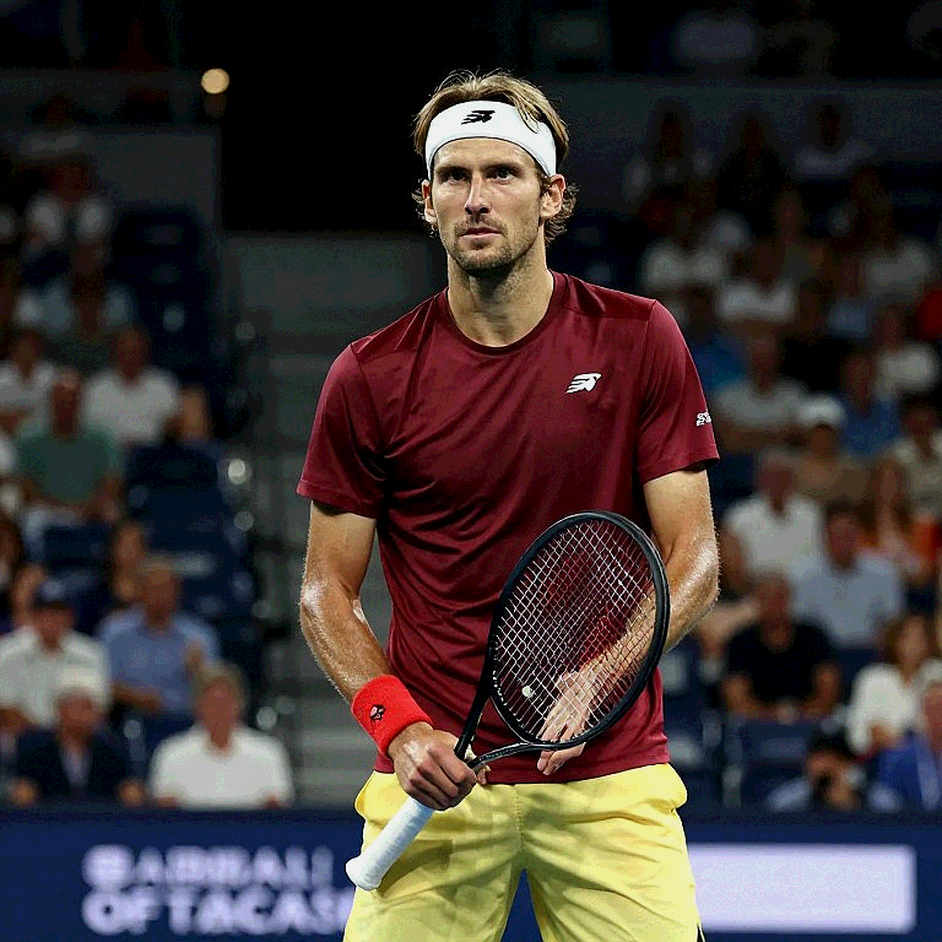
But perhaps the most crucial moment of the match was not in the statistics. It was in the fifth and seventh games of the second set. After being broken by Oliynykova in the fifth game – a psychological blow that could rattle many young players – Eala responded immediately. She broke back in the sixth game, then broke again in the seventh to lead 5-3. This is the hallmark of a mature player: the ability to recover instantly from a setback, rather than letting it spiral into a losing streak.
This victory carries an even deeper strategic significance: it proves Eala's adaptability across different surfaces. On the Strasbourg clay in May, she lost to Oliynykova 6-3, 5-7, 3-6 – a match where she won the first set then gradually lost her advantage. This time on the US Open hard courts, she closed the match in straight sets. The difference lies in tactical adjustment: on hard courts, Eala's flat, low-bouncing shots maximize their effectiveness, replacing the heavy topspin rallies suited to clay. This is evidence that her team has worked effectively to patch the gaps in her game.
With this victory, Eala has reached the third round of the US Open for the first time in her career. A seemingly modest milestone, but one that carries special weight. At age 21, ranked world No. 18 and seeded No. 17, Eala is in a phase where her ranking has outpaced her Grand Slam results. This is a form of "expectation gap" common among rising players: they perform brilliantly at WTA 1000 and 500 events, but need more time to translate that success into deep Grand Slam runs.
Eala's next opponent will be the winner of the match between Iva Jovic and Fran Jones – both young American players whom she calls "great friends." This is a generational clash: three young players who grew up together through the ITF and junior circuits, now meeting on one of tennis's biggest stages. With the support of the Filipino community in New York – one of the largest overseas Filipino communities in the United States – Eala will have a significant psychological advantage.
I have followed Eala since her days as a junior Grand Slam champion four years ago. Her progress has not come through any revolution; it has come through accumulation. Each season, she adds a new layer of skill: first consistency, then power, and now the ability to read matches at an elite level. The victory over Oliynykova is a step in the right rhythm – slow but steady – on the path to becoming a genuine contender for major titles.

Numbers only tell half the story; the other half lies on the court. And on the Flushing Meadows courts this week, Alex Eala is telling a very compelling story.